
AI Infrastructure Services
AI dataset engineering, knowledge systems, agent development, evaluation, benchmarking, automation and managed AI operations.
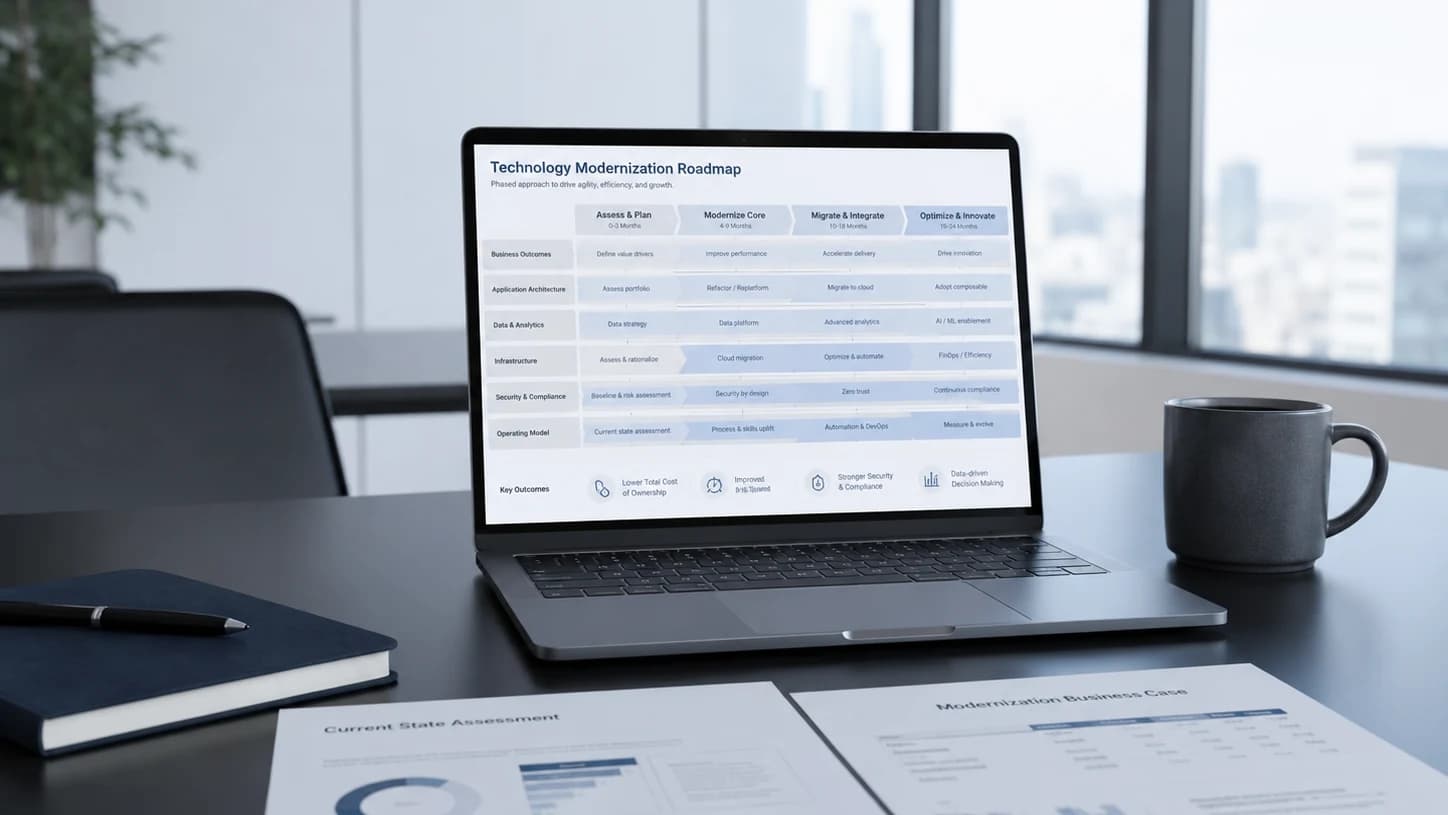
What is AI Infrastructure Services?
AI Infrastructure Services support the research and operating foundations behind applied AI systems: datasets, knowledge systems, agents, evaluation, benchmarking, automation and managed operations.
Primary audiences: AI companies, Data teams, Enterprise AI leaders.
Typical delivery: AI dataset plan and Knowledge system blueprint.
Coverage: United States, Canada, United Kingdom, Australia, Europe, Middle East, India, Global.
AI Infrastructure Services at a glance
Who this is for
- AI companies
- Data teams
- Enterprise AI leaders
- Technology operations teams
Problems solved
- AI systems need better data, knowledge and evaluation foundations.
- Agent or automation initiatives require business, workflow and risk clarity.
- AI benchmarks and evaluation systems are not defined.
- Managed operations need governance, monitoring and continuous improvement.
Typical deliverables
- AI dataset plan
- Knowledge system blueprint
- Agent evaluation framework
- Managed operations model
Decision outcomes
- Dataset readiness
- Quality control plan
- Reduced model risk
- Searchable knowledge foundation
- Better AI retrieval
Service Overview
AI Infrastructure Services support the research and operating foundations behind applied AI systems: datasets, knowledge systems, agents, evaluation, benchmarking, automation and managed operations.
The page is structured as a service division: parent service, focused subservices and decision-specific delivery paths. Clients can start with a broad research question or select a precise offering when the business problem is already defined.
Business Problems Solved
AI systems need better data, knowledge and evaluation foundations.
Stratova scopes the evidence required to test this risk, document the assumptions and show whether it should change the recommendation.
Agent or automation initiatives require business, workflow and risk clarity.
Stratova scopes the evidence required to test this risk, document the assumptions and show whether it should change the recommendation.
AI benchmarks and evaluation systems are not defined.
Stratova scopes the evidence required to test this risk, document the assumptions and show whether it should change the recommendation.
Managed operations need governance, monitoring and continuous improvement.
Stratova scopes the evidence required to test this risk, document the assumptions and show whether it should change the recommendation.
Who This Is For
AI companies
Useful when ai companies need an independent view of market evidence, tradeoffs, uncertainty and the next decision point.
Data teams
Useful when data teams need an independent view of market evidence, tradeoffs, uncertainty and the next decision point.
Enterprise AI leaders
Useful when enterprise ai leaders need an independent view of market evidence, tradeoffs, uncertainty and the next decision point.
Technology operations teams
Useful when technology operations teams need an independent view of market evidence, tradeoffs, uncertainty and the next decision point.
Methodology
Frame the decision
Decision framing with stakeholders, scope boundaries, geography and confidence threshold.
Map the evidence
Source map creation across public data, trade sources, paid databases, expert inputs and client materials.
Validate and challenge
Evidence collection with source confidence scoring, contradiction checks and assumption logs.
Synthesize for action
Analyst synthesis that separates facts, inference, risks and recommended decision options.
Research workstream
Executive delivery through a concise report, working model, source appendix and review session.
Subservices
Each offering below is a focused research path with its own decision logic, evidence plan, deliverables, timeline and related-service links.
AI Dataset Engineering
Plans and structures datasets for AI applications, including source selection, curation, labeling, quality control and governance.
- Dataset readiness
- Quality control plan
AI Knowledge Systems
Designs knowledge systems that make enterprise information usable for AI assistants, research workflows and decision support.
- Searchable knowledge foundation
- Better AI retrieval
AI Agent Development
Defines, scopes and supports AI agent workflows with business requirements, data needs, tool logic and evaluation criteria.
- Agent build clarity
- Reduced implementation risk
AI Evaluation
Designs and runs evaluation frameworks for AI systems, agents and workflows against business-specific quality and risk criteria.
- AI performance visibility
- Risk-aware deployment decisions
AI Benchmarking
Compares AI models, vendors or agent systems using benchmark criteria aligned to real workflows and business outcomes.
- Comparable AI performance
- Vendor or model decision clarity
AI Automation
Identifies and scopes AI automation opportunities with workflow evidence, controls, measurement logic and implementation sequencing.
- Automation priorities
- Control design
Managed AI Operations
Defines ongoing operations for AI systems, including monitoring, quality review, escalation, improvement and governance cadence.
- Operational AI governance
- Continuous improvement
Deliverables
- AI dataset plan
- Knowledge system blueprint
- Agent evaluation framework
- Managed operations model
Evidence Sources
source data review
Reviewed for source quality, decision relevance and contradiction against other available evidence.
workflow requirements
Reviewed for source quality, decision relevance and contradiction against other available evidence.
model task requirements
Reviewed for source quality, decision relevance and contradiction against other available evidence.
quality and privacy constraints
Reviewed for source quality, decision relevance and contradiction against other available evidence.
document inventory
Reviewed for source quality, decision relevance and contradiction against other available evidence.
workflow needs
Reviewed for source quality, decision relevance and contradiction against other available evidence.
Evidence-led approach
Public sources
Public, trade, market, company, government, marketplace, search and category signals are used when they are relevant to the decision.
Client-provided inputs
Client briefs, internal context, target geographies, supplier lists, product assumptions and sales workflow details are incorporated when provided.
Analyst review
Analysts separate facts, inference, contradictions, assumptions, weak evidence and decision implications before delivery.
Limitations
Findings document known evidence gaps, source limits, unresolved assumptions and areas where further validation may be required.
Confidence level
Confidence is expressed through source quality, consistency, recency, relevance to the decision and the strength of triangulation.
Decision context
This service is scoped around ai systems need better data, knowledge and evaluation foundations..
Sample Output Preview
Executive Brief
Decision options, risks, assumptions and recommended next steps.
Source Appendix
Source notes, confidence levels and validation context.
Decision Matrix
Criteria, tradeoffs and evidence-weighted recommendation logic.
Industries Served
Manufacturers
Research is adjusted for buyer behavior, supply structure, market maturity and the decision owner responsible for action.
Importers and exporters
Research is adjusted for buyer behavior, supply structure, market maturity and the decision owner responsible for action.
Procurement teams
Research is adjusted for buyer behavior, supply structure, market maturity and the decision owner responsible for action.
Investment firms
Research is adjusted for buyer behavior, supply structure, market maturity and the decision owner responsible for action.
AI and technology companies
Research is adjusted for buyer behavior, supply structure, market maturity and the decision owner responsible for action.
Research and strategy teams
Research is adjusted for buyer behavior, supply structure, market maturity and the decision owner responsible for action.
Buyer questions this page answers
When should a company use AI Infrastructure Services?
AI Infrastructure Services is useful when leadership needs to make a decision about how AI data, knowledge, agents, evaluation and operations should be designed and the existing evidence is fragmented, biased toward internal assumptions or too shallow for investment, sourcing or market planning.
How does Stratova keep the work decision-focused?
Every engagement starts with the decision, the deadline, the decision owner and the consequence of being wrong. The research plan is then built around evidence that can change or strengthen that decision.
What does the final output look like?
Outputs typically include an executive report, source notes, confidence scoring, findings, assumptions, risks, recommended actions and a review session with the research lead.
Case Applications
Decision supported
Stratova can use source data review and workflow requirements to help leadership decide what dataset structure, quality controls and governance are needed for an AI use case.
Decision supported
Stratova can use document inventory and workflow needs to help leadership decide how organizational knowledge should be structured for retrieval, AI assistance and decision support.
Decision supported
Stratova can use workflow analysis and user tasks to help leadership decide which agent workflow is worth building and how it should be governed, evaluated and deployed.
Related Services
AI Research
AI market research, vendor evaluation, readiness, ROI analysis, strategy and transformation intelligence.
Business Intelligence
KPI analytics, executive reporting, forecast analytics, decision intelligence and market analytics.
Strategic Research
Growth strategy, market expansion, due diligence, scenario planning and business case development.
Need ai infrastructure services with executive-level clarity?
Share the decision, deadline and audience. Stratova will recommend the right research service, evidence plan and delivery format.