
AI Automation
Identifies and scopes AI automation opportunities with workflow evidence, controls, measurement logic and implementation sequencing.
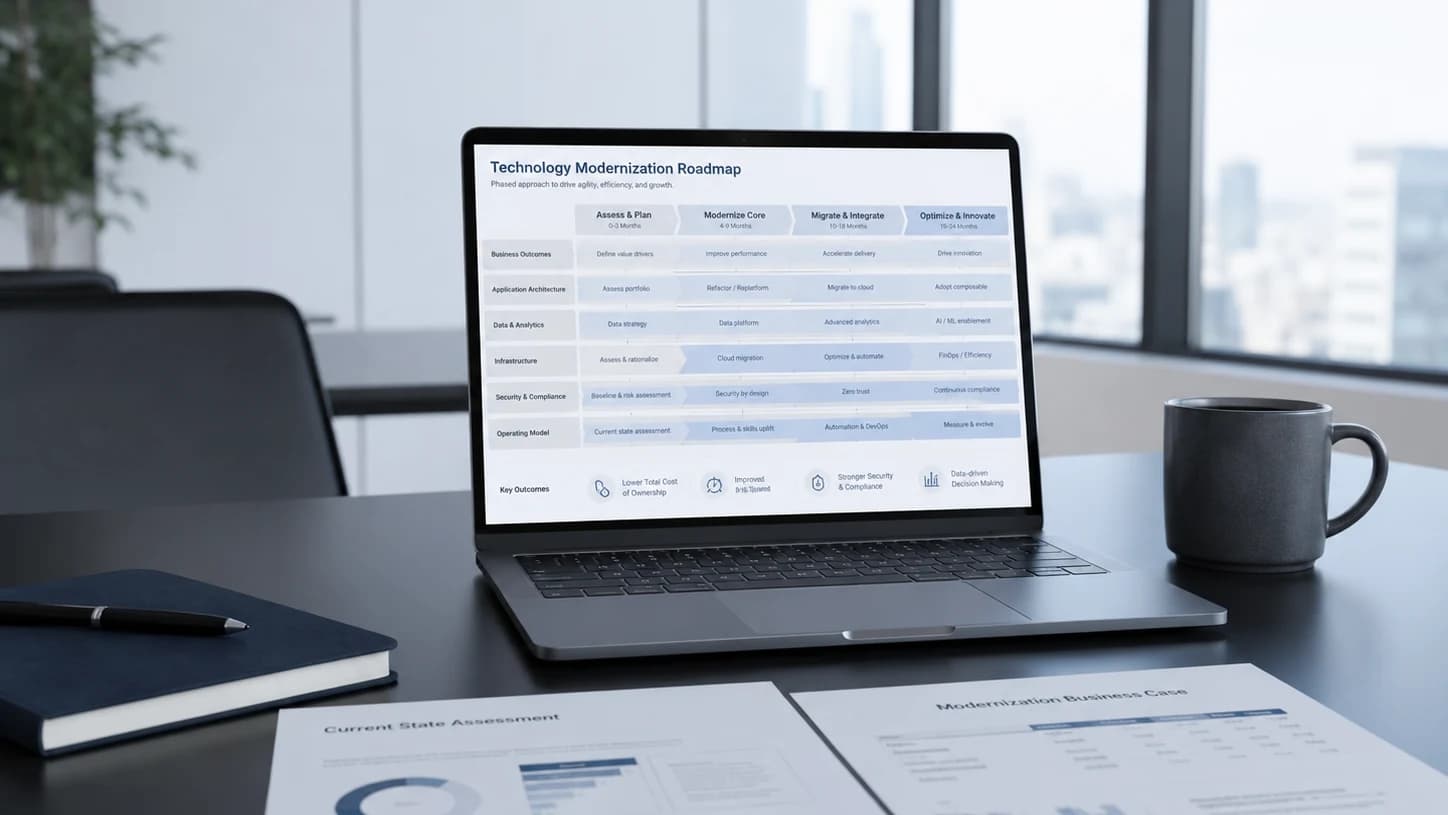
What is AI Automation?
AI Automation helps organizations decide which AI-enabled automations are suitable, measurable and safe to implement using evidence such as process mapping, task frequency and cost, user constraints and analyst review.
Best for: Operations leaders, Enterprise AI teams, Process owners.
Timeline: 3 to 8 weeks depending on process complexity.
Parent service: AI Infrastructure Services.
AI Automation at a glance
Who this is for
- Operations leaders
- Enterprise AI teams
- Process owners
- Automation teams
Problems solved
- Automating low-value work
- Ignoring exception handling
- Deploying without ownership
Typical deliverables
- Automation opportunity map
- Workflow requirements
- Risk and control notes
- Implementation roadmap
Decision outcomes
- Automation priorities
- Control design
- Measurable implementation plan
Service Overview
AI Automation helps organizations decide which AI-enabled automations are suitable, measurable and safe to implement. The work is designed for teams that need more than a general market report: they need sourceable evidence, clear tradeoffs and a recommendation that can be used in a planning, procurement, investment or executive review meeting.
Stratova approaches this work by connecting commercial context, operating constraints and the evidence required to change a decision. The engagement does not stop at collecting information. It explains what the evidence means, where confidence is high, where assumptions remain exposed and what action is reasonable next.
Business Problems Solved
Automating low-value work
The research plan is built to expose this risk early, test the underlying assumptions and show whether it should change the decision.
Ignoring exception handling
The research plan is built to expose this risk early, test the underlying assumptions and show whether it should change the decision.
Deploying without ownership
The research plan is built to expose this risk early, test the underlying assumptions and show whether it should change the decision.
Who This Is For
Operations leaders
Best suited for teams that need an evidence-backed answer, not a broad research download.
Enterprise AI teams
Best suited for teams that need an evidence-backed answer, not a broad research download.
Process owners
Best suited for teams that need an evidence-backed answer, not a broad research download.
Automation teams
Best suited for teams that need an evidence-backed answer, not a broad research download.
Methodology
Frame the decision
Frame the decision around which AI-enabled automations are suitable, measurable and safe to implement.
Map the evidence
Build the source map using process mapping, task frequency and cost, user constraints, system and data readiness.
Validate and challenge
Score source confidence and document assumptions that could affect the recommendation.
Synthesize for action
Synthesize findings into decision options, risks, expected outcomes and next steps.
Deliverables
Automation opportunity map
Delivered with source notes, confidence levels and implications for the decision owner.
Workflow requirements
Delivered with source notes, confidence levels and implications for the decision owner.
Risk and control notes
Delivered with source notes, confidence levels and implications for the decision owner.
Implementation roadmap
Delivered with source notes, confidence levels and implications for the decision owner.
Sample Output Preview
Executive Brief
Decision options, risks, assumptions and recommended next steps.
Source Appendix
Source notes, confidence levels and validation context.
Decision Matrix
Criteria, tradeoffs and evidence-weighted recommendation logic.
Expected outcomes
Automation priorities
Used to frame options, evidence gaps, confidence level and the next practical action for the decision owner.
Control design
Used to frame options, evidence gaps, confidence level and the next practical action for the decision owner.
Measurable implementation plan
Used to frame options, evidence gaps, confidence level and the next practical action for the decision owner.
Evidence-led approach
Public sources
Public, trade, market, company, government, marketplace, search and category signals are used when they are relevant to the decision.
Client-provided inputs
Client briefs, internal context, target geographies, supplier lists, product assumptions and sales workflow details are incorporated when provided.
Analyst review
Analysts separate facts, inference, contradictions, assumptions, weak evidence and decision implications before delivery.
Limitations
Findings document known evidence gaps, source limits, unresolved assumptions and areas where further validation may be required.
Confidence level
Confidence is expressed through source quality, consistency, recency, relevance to the decision and the strength of triangulation.
Decision context
The engagement is designed to help a decision owner decide which AI-enabled automations are suitable, measurable and safe to implement.
Industries Served
Manufacturers
Scope, source strategy and recommendations are adapted to the economics and operating context of this audience.
Importers and exporters
Scope, source strategy and recommendations are adapted to the economics and operating context of this audience.
Procurement teams
Scope, source strategy and recommendations are adapted to the economics and operating context of this audience.
Investment firms
Scope, source strategy and recommendations are adapted to the economics and operating context of this audience.
AI and technology companies
Scope, source strategy and recommendations are adapted to the economics and operating context of this audience.
Research and strategy teams
Scope, source strategy and recommendations are adapted to the economics and operating context of this audience.
Buyer questions this page answers
When should a company use AI Automation?
AI Automation is useful when leadership needs to make a decision about which AI-enabled automations are suitable, measurable and safe to implement and the existing evidence is fragmented, biased toward internal assumptions or too shallow for investment, sourcing or market planning.
How does Stratova keep the work decision-focused?
Every engagement starts with the decision, the deadline, the decision owner and the consequence of being wrong. The research plan is then built around evidence that can change or strengthen that decision.
What does the final output look like?
Outputs typically include an executive report, source notes, confidence scoring, findings, assumptions, risks, recommended actions and a review session with the research lead.
Case Applications
Automation priorities
A client team can use this work to align stakeholders, challenge assumptions and decide what to do next with evidence in hand.
Control design
A client team can use this work to align stakeholders, challenge assumptions and decide what to do next with evidence in hand.
Measurable implementation plan
A client team can use this work to align stakeholders, challenge assumptions and decide what to do next with evidence in hand.
Insights
How process mapping changes the decision
Stratova evaluates this signal in context, checks it against other sources and explains whether it strengthens or weakens the case.
How task frequency and cost changes the decision
Stratova evaluates this signal in context, checks it against other sources and explains whether it strengthens or weakens the case.
How user constraints changes the decision
Stratova evaluates this signal in context, checks it against other sources and explains whether it strengthens or weakens the case.
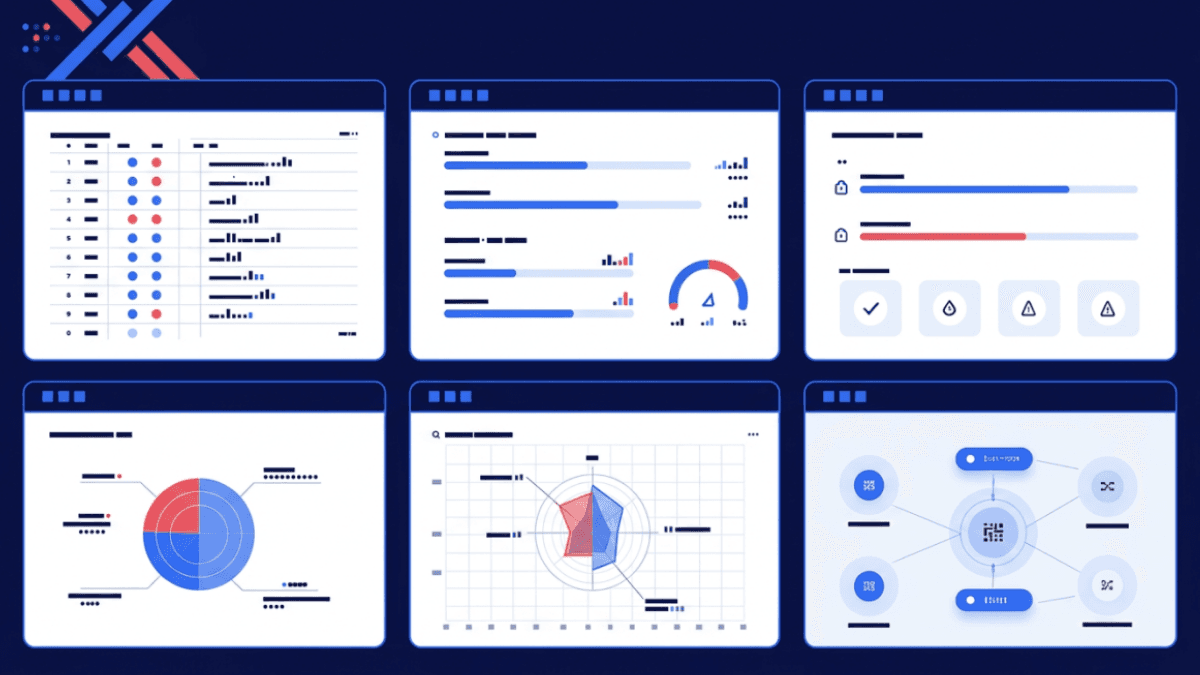
Related Services
AI Dataset Engineering
Plans and structures datasets for AI applications, including source selection, curation, labeling, quality control and governance.
AI Infrastructure ServicesAI Knowledge Systems
Designs knowledge systems that make enterprise information usable for AI assistants, research workflows and decision support.
AI Infrastructure ServicesAI Agent Development
Defines, scopes and supports AI agent workflows with business requirements, data needs, tool logic and evaluation criteria.
AI ResearchAI Market Research
Maps AI markets, buyer demand, vendor categories, use cases and adoption barriers for product, investment and strategy decisions.
Business IntelligenceKPI Analytics
Defines and structures KPIs so reporting connects to decisions, ownership, cadence and operating context.
Strategic ResearchGrowth Strategy
Builds evidence for growth strategy decisions across segments, products, geographies, channels and operating constraints.
Need ai automation with executive-level clarity?
Share the decision, deadline and audience. Stratova will recommend the right research service, evidence plan and delivery format.